

What Are Healing Crystals? An Ultimate Beginner's Guide
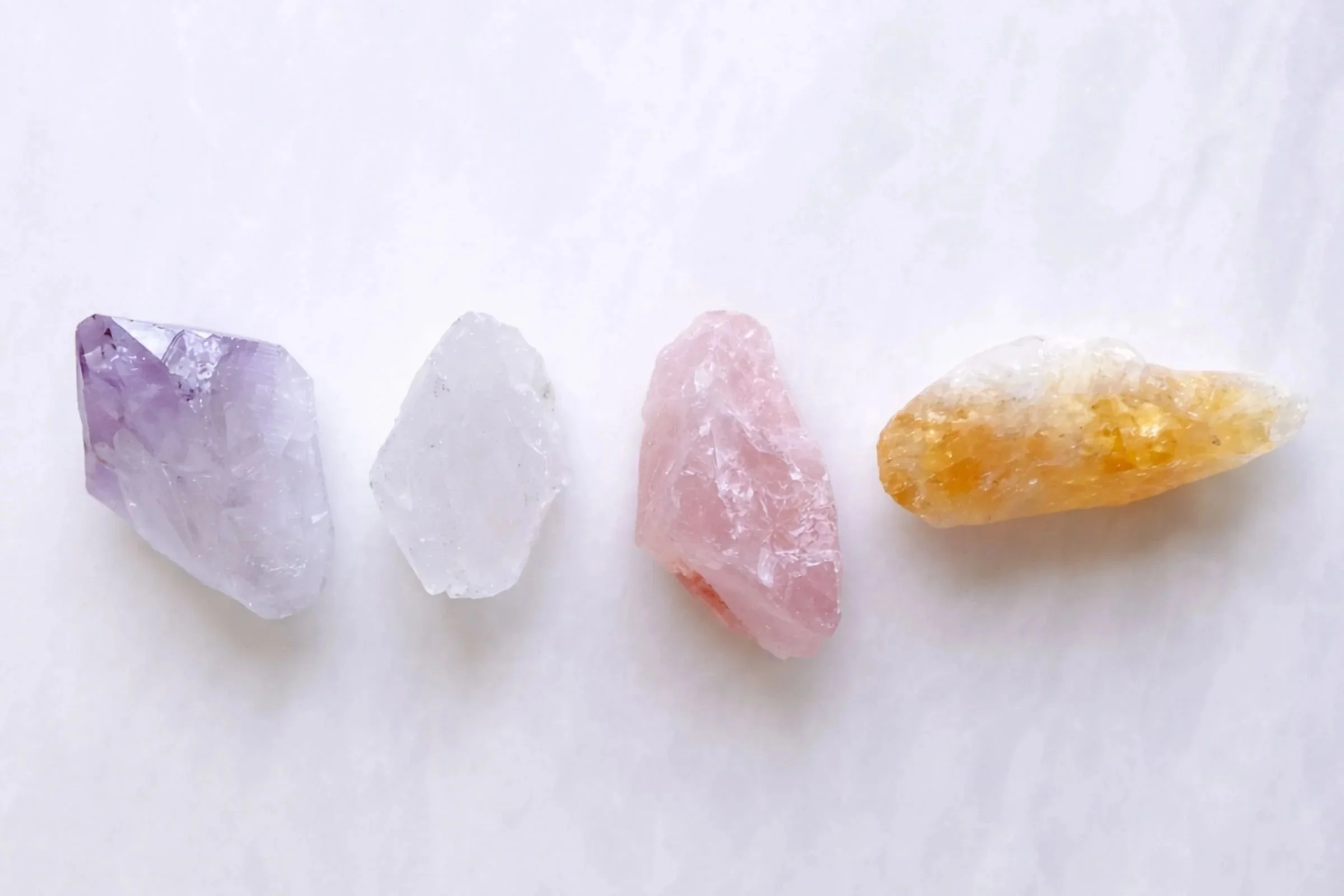
Whether you've been gifted your first crystal or simply curious about what all the fuss is about — this guide is your starting point.
Skip to: What are healing crystals? · A brief history · How they work · Types of crystals · Crystals by purpose · How to choose yours · How to use them · Cleansing and charging · FAQs
Maybe you've seen crystals popping up everywhere lately — on people's desks, in wellness spaces, all over your Instagram feed — and you've found yourself wondering: is there actually something to this?
You're not alone. And you don't need to be a seasoned meditator or someone who burns incense every morning to get started. Healing crystals are for anyone who's curious; whether you're drawn to them for their beauty, their meaning, their energy, or simply because someone you love can't stop talking about them.
People have been fascinated by crystals for thousands of years. The ancient Egyptians used them in jewellery and rituals and indigenous healers across Asia, the Americas and beyond have long worked with stones as tools for balance and intention. Today, that tradition is finding a modern audience with those of us who want something tangible to hold onto as part of a more mindful, intentional life.
So, what exactly are healing crystals? How do they work? And where do you begin when there are hundreds of different stones to choose from?
That's exactly what this guide is here for. We'll walk you through everything: what healing crystals are, the most popular types and what they're used for, and how to pick your very first healing stone without feeling overwhelmed.
What are healing crystals?
Healing crystals are natural minerals and gemstones that have been used for thousands of years as tools for intention, focus and emotional wellbeing. Formed deep within the earth over millions of years under intense heat and pressure, each crystal develops a unique structure, colour and energetic quality. Today, people use them as tangible anchors for mindfulness, self-care and personal intention.
At their core, crystals are geological wonders.
Minerals like quartz, amethyst and obsidian form when molten rock cools slowly, allowing atoms to arrange themselves into extraordinarily ordered, repeating patterns — what scientists call a crystal lattice. It's this precise internal structure that gives each stone its distinctive shape, colour and physical properties. Far from being ordinary pebbles, crystals are some of the most structurally complex objects found in nature.
But humans have always sensed there's something more to them than geology. Ancient Egyptians adorned their dead with lapis lazuli and carnelian, believing the stones offered protection in the afterlife. Greek warriors carried amethyst into battle. Jade has been revered in Chinese culture for over 5,000 years as a symbol of purity and harmony. Across wildly different civilisations, with no connection to one another, people reached for the same conclusion: that certain stones carry a certain kind of energy.
Today, that tradition is finding a whole new generation of admirers. Whether you're drawn to crystals for their beauty, their symbolism, or a quiet feeling that they simply do something — you're part of a very long story.
A brief history of healing crystals
The relationship between humans and crystals predates writing itself. Archaeological evidence from Palaeolithic sites across Europe suggests humans were working with stones and minerals for symbolic and ritual purposes tens of thousands of years ago, long before any organised religion or formal healing tradition existed. It seems something about these stones compelled our earliest ancestors to pick them up, carry them, and bury them with their dead.
As civilisations developed, so did the lore around specific stones. In ancient Mesopotamia — modern-day Iraq — Sumerian texts from around 1500 BCE describe using carnelian, lapis lazuli and green stones in magic formulas and medicinal preparations. These weren't fringe beliefs either; they were written into the official medical literature of their time¹.
In India, the Vedic tradition developed an entire system called Jyotish, or Vedic astrology, in which specific gemstones were prescribed to balance planetary energies, a practice so deeply embedded in the culture that it continues to be followed to this day.²
Medieval Europe had its own rich crystal tradition. Hildegard of Bingen, the 12th-century German abbess, mystic and one of history's earliest female scientists, wrote extensively about the healing properties of gemstones in her medical texts³. She prescribed emeralds for heart conditions and jasper for emotional strength, not as mere superstition, but as serious medicine by the standards of her era.
Crystals fell somewhat out of fashion during the Age of Reason, when science began displacing earlier belief systems. But the 1970s and 80s brought a quiet revival, carried by the New Age movement's rekindled interest in earth-based spirituality, mindfulness and alternative wellness. By the 2010s, crystals had found their way into mainstream culture, onto the desks of tech workers in Silicon Valley, into the hands of celebrities, and eventually into the pages of mainstream wellness publications.
So how do they actually work? That's where it gets interesting…
How do healing crystals actually work?
The straightforward truth is that there is no scientific consensus that crystals produce measurable physical healing effects. A well-known study by psychologist Christopher French⁴ found that people reported similar sensations whether they were holding a genuine quartz crystal or a piece of ordinary glass, suggesting that much of what people experience may come from the power of expectation and intention rather than the stone itself.
But that doesn't make the experience any less real, or any less valuable. If you think about what actually happens when you sit and hold a smooth piece of quartz in your palm and focus on how you want to feel, you’ll notice how you’ve slowed down and set an intention. That small moment of stillness in what is probably a very busy day is important. The crystal becomes a physical anchor for your meditation or manifestation, and something tangible to return to when life speeds back up again.
But there is some science worth knowing too. Quartz crystals produce a small electrical charge when pressure is applied to them, a property called piezoelectricity. It's why quartz is used in watches, microphones and electronics. Whether this has any bearing on how crystals interact with the human body remains unproven, but it's a reminder that these aren't inert lumps of rock. They have do have measurable physical properties.
Most people who work with crystals today aren't expecting miracles, but they value them as tools for mindful, intentional practice. These beautiful objects are something to hold onto, literally and figuratively, as you navigate through life.
It’s important to note: crystals are a complementary practice and are not a substitute for medical advice, mental health support or professional treatment. If you're dealing with a health concern, always speak to a qualified professional first.
Now that we understand the why, let's look at the crystals themselves…
What are the most popular types of healing crystal?
With hundreds of crystals to choose from, it can feel overwhelming knowing where to begin. Thankfully, you don't need a vast collection to get started on your journey. A handful of well-chosen stones will cover most of what people turn to crystals for. Here are seven of the most powerful healing crystals we love:
Clear quartz
Often called the master healer, clear quartz is the most versatile stone you can own. Colourless and brilliantly transparent, it's associated with mental clarity, focus and amplification, and is said to sharpen your intentions and enhance the properties of other crystals placed near it. If you're unsure where to begin, clear quartz is the answer: it works with whatever you bring to it.
Amethyst
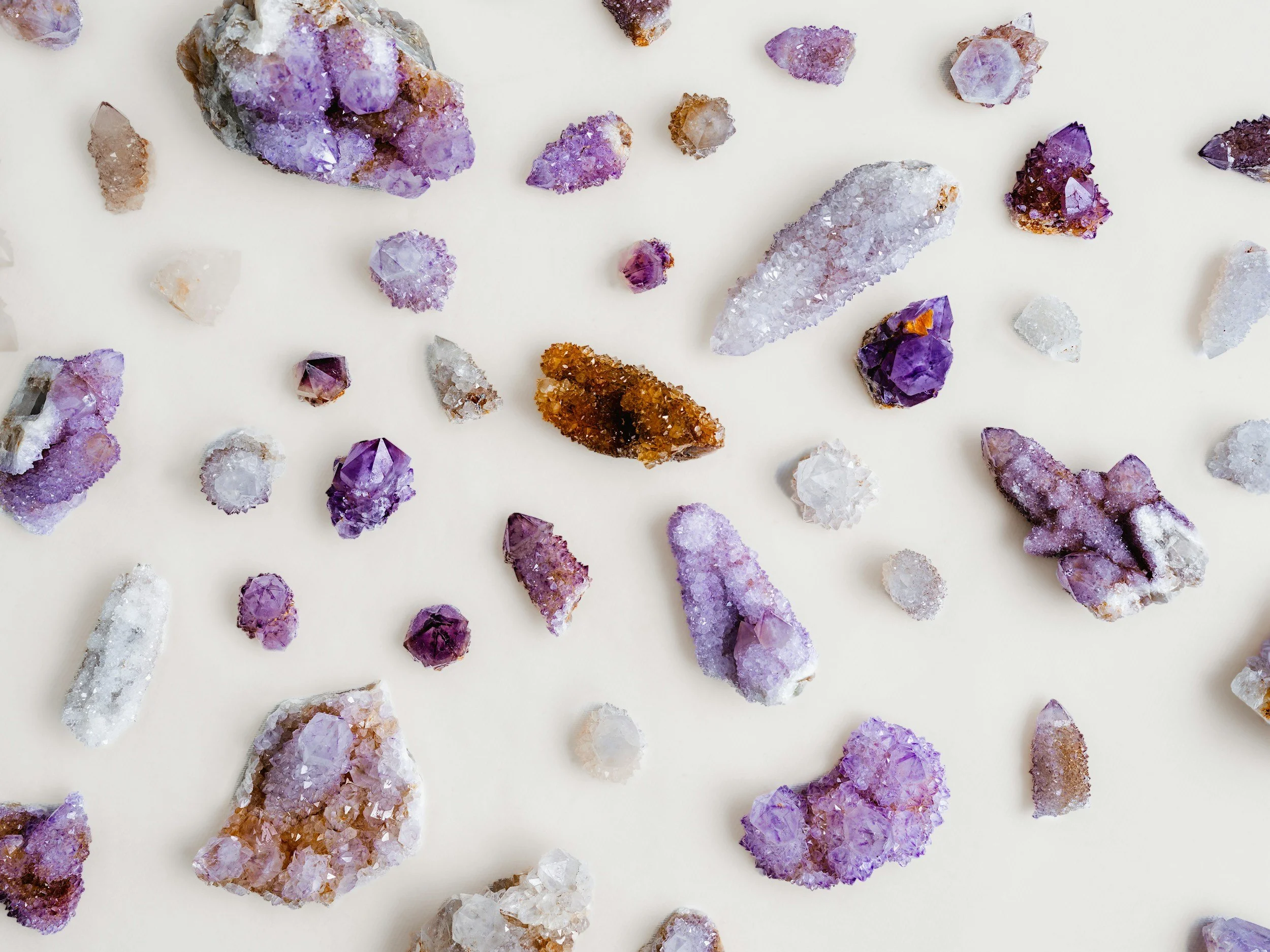
With its distinctive purple hue ranging from pale lavender to deep violet, amethyst is one of the most recognisable healing crystals in the world. It's associated with calm, clarity and emotional protection, making it a go-to stone for anyone working through stress, anxiety or disrupted sleep. Hold it during moments of stillness, keep it on your bedside table, or simply place it somewhere you'll see it when you need a reminder to breathe
Rose quartz
Soft, pale pink and immediately soothing, rose quartz is known as the stone of love — though its healing qualities extend well beyond romance. It's associated with self-compassion, emotional recovery and the gentle work of repairing how we feel about ourselves and others. Many people keep rose quartz close during difficult periods, using it as a physical anchor for the intention to be a little kinder to themselves.
Black tourmaline
Deep, dark and grounding, black tourmaline is one of the most widely used protective healing stones. It's associated with shielding against negative energy, emotional resilience and keeping you feeling rooted when anxiety or outside pressures start to take hold. Many people place it near their front door, carry it in a bag, or keep it on their desk as an everyday anchor.
Citrine
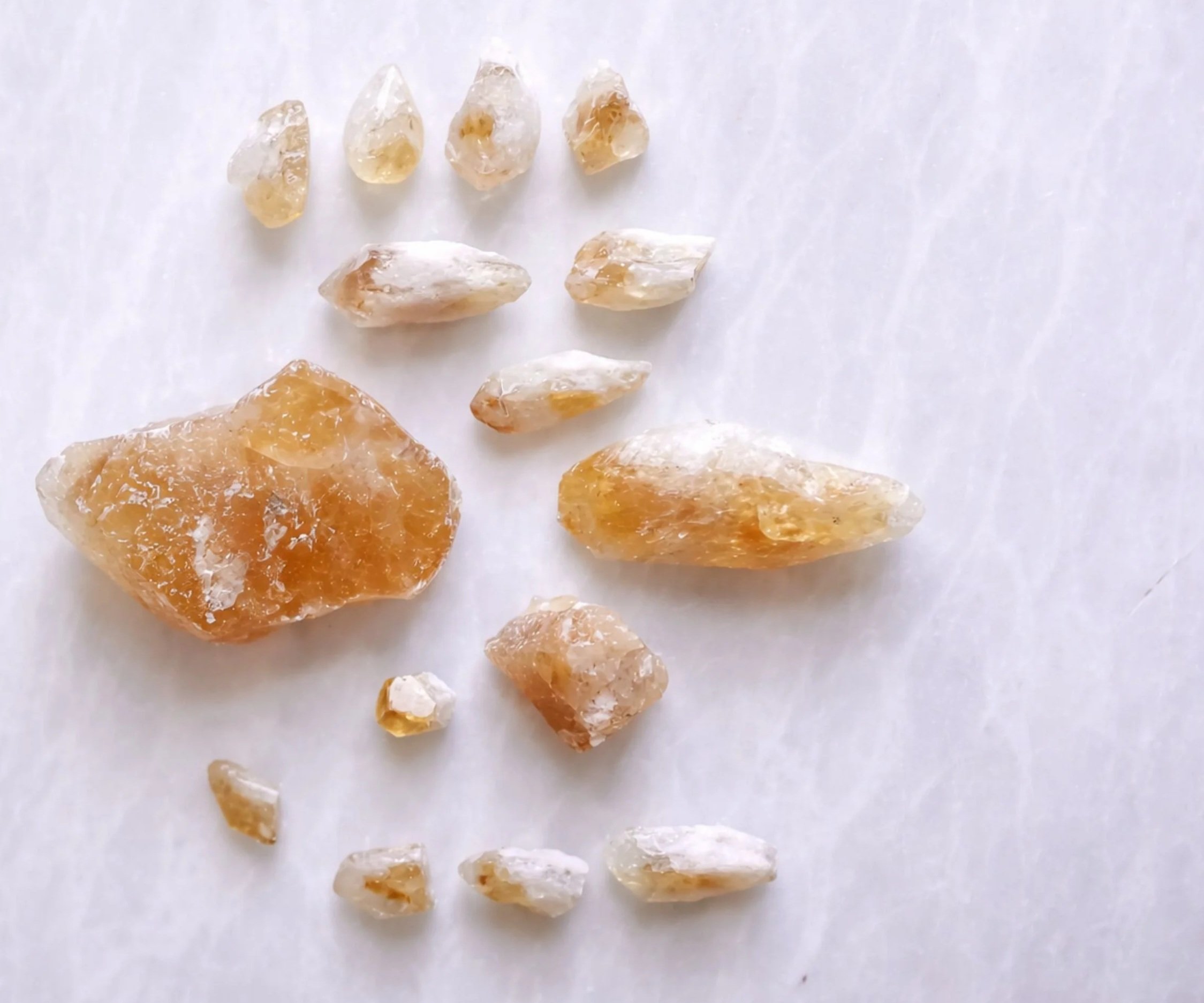
Warm, golden and immediately uplifting, citrine brings a different kind of healing, rooted in positivity and forward momentum. Associated with abundance and creative energy, it's a popular choice for anyone feeling stuck, depleted or in need of a genuine mood shift. Unusually among crystals, citrine is said not to absorb negative energy, meaning it's one of the few that rarely needs cleansing.
Selenite
Named after Selene, the Greek goddess of the moon, selenite is a translucent, pearlescent white crystal with a calm, clarifying energy. It's associated with mental peace, stress relief and creating a sense of sanctuary — making it a popular choice for bedrooms and meditation spaces. Selenite is also said to gently cleanse and recharge other crystals placed near it, making it a quiet cornerstone of any healing practice.
Lapis lazuli
Deep royal blue flecked with gold, lapis lazuli has been used as a healing stone for thousands of years, prized by ancient Egyptians, Sumerians and medieval healers alike. Today it's associated with truth, self-expression and emotional clarity, particularly for those who struggle to articulate how they're really feeling. If unexpressed emotions or a loss of inner direction are what you're working through, lapis lazuli is a stone worth getting to know.
Crystals by purpose: What type do you need?
One of the most natural ways to find your first crystal is to start not with the stone, but with yourself. Healing looks different for everyone. For some people it's about managing anxiety, for others it's processing grief, rebuilding confidence, or simply sleeping better. What do you need a little more of right now? The right crystal often becomes obvious once you've answered that question honestly.
Best crystals for anxiety and stress
For many of us this is where crystal healing begins – the very real, very physical experience of carrying stress that you can't seem to put down. Amethyst is the stone most people reach for first, as it’s calming and deeply familiar to anyone who works with crystals. Lepidolite, a soft lilac stone containing natural lithium, is increasingly popular for anxiety specifically. Blue lace agate, with its pale, cloud-like banding, brings a quieter, more cooling energy that many people find genuinely soothing in difficult moments.
Best crystals for sleep
Crystals can't replace good sleep habits, but many people find them a helpful part of a wind-down ritual. Amethyst is again a natural choice here, particularly placed near the bed. Howlite — white, chalky and understated — is associated with quieting an overactive mind, which makes it useful for anyone whose main sleep problem is simply not being able to switch off. Similarly, selenite brings a gentle, clarifying calm to a bedroom environment.
Best crystals for love and relationships
Emotional healing — learning to trust, to open up, to forgive — is some of the deepest work any of us do. Rose quartz is the obvious starting point, and for good reason. Its association with love, compassion and emotional openness makes it one of the most universally recommended healing stones. But this category goes deeper than romance. Rhodonite, a pink and black stone, is associated with healing emotional wounds and learning to trust again. Green aventurine supports the heart chakra and is a gentle companion for anyone working on opening up.
Best crystals for protection
For those who feel energetically sensitive — easily drained by other people or certain environments — protective stones can be transformative. Black tourmaline is the most widely used, associated with creating a boundary between you and draining or negative energy. Obsidian works similarly but with a stronger, more direct quality. Shungite, a lesser-known but increasingly popular black stone, is associated with protection and grounding in equal measure.
Best crystals for manifesting and abundance
This is one of the fastest-growing areas of crystal interest, and the stones associated with it share a quality of expansive, forward-moving energy. Citrine is the classic choice — associated with confidence, positivity and drawing opportunity toward you. Pyrite, sometimes called fool's gold for its metallic shimmer, is associated with wealth and willpower. Green aventurine completes a popular trio, bringing luck and openness to new possibilities.
Best crystals for focus and mental clarity
Clear quartz is the natural home for this intention — amplifying your thinking and cutting through mental fog. Tiger's eye brings a grounded, decisive energy that's helpful for anyone who struggles to make decisions or follow through. Fluorite, available in beautiful purple and green varieties, is associated with concentration and mental order, making it a favourite among students and anyone with a demanding workload.
How to choose your first healing crystal
Choosing a healing crystal is less like passing a test and more like picking up a book that catches your eye in a bookshop. Something draws you in — the colour, the weight, the way the light moves through it, or simply a feeling you can't quite articulate. That instinct is a perfectly valid place to start.
That said, a little guidance doesn't hurt:
Start with your intention
The most grounding place to begin is with a question: what do you want support with right now? Not what you think you should want, what you actually need. More calm? Better sleep? A clearer head? More confidence? Once you have even a rough answer, the previous section of this guide will point you toward the stones most associated with that intention. You don't need certainty. A general direction is enough.
Let yourself be drawn
If you have the chance to browse crystals in person, pay attention to what you keep picking up. The stone you return to three times without knowing why is usually telling you something. Many experienced crystal practitioners will tell you that the crystal chooses you as much as you choose it — and while that might sound fanciful, it points to something real: your instincts about what you need are worth listening to.
Start small
One or two crystals is genuinely enough to begin. There's a temptation, especially when you first discover the world of crystals, to want everything at once — but a single stone you connect with deeply will do far more for your practice than a shelf full of ones you've never engaged with. Clear quartz, amethyst and rose quartz are the three most recommended starting points, and between them they cover a remarkable range of intentions.
Know what you're buying
Not all crystals are created equal, and as the market has grown, so has the prevalence of dyed, treated or outright synthetic stones being sold as natural. A few things to look for: natural crystals will often have slight imperfections, inclusions or variation in colour — perfect uniformity can be a red flag. Buy from a seller who is transparent about where their crystals come from and how they are sourced.
Which brings us to one more thing worth knowing…
Choose ethically sourced crystals
The crystal industry has a complex supply chain. Many of the world's most popular stones are mined in parts of Africa, South America and South Asia under conditions that range from fairly regulated to deeply problematic, with low pay, and, in some cases, unsafe working environments. If the healing intention behind your crystal matters to you, it's worth extending that care to the people who brought it out of the earth.
Look for sellers who can tell you where their crystals come from, who work with verified ethical suppliers, and who are honest about the limits of what they can guarantee.
How do you use healing crystals?
One of the most common questions beginners ask is: am I doing this right? The honest answer is that there is no single right way to use a healing crystal. No ritual you must perform, no schedule you must keep, no level of belief you must reach before it counts. Crystals work best when they fit naturally into your life — and for most people, that means starting simply and building from there.
Here are the most common ways people work with healing crystals, and a little guidance on each.
Hold them during quiet moments
The simplest and most immediate way to connect with a crystal is just to hold it. During a few minutes of quiet — first thing in the morning, last thing at night, or any pause in your day — holding a crystal in your hand brings a moment of physical stillness that can itself be grounding. Many people find the weight and texture of a stone in their palm genuinely calming, entirely independently of anything metaphysical.
Carry one with you
Keeping a small crystal in your pocket, your bag or your wallet means it's available whenever you need it — a touchstone in the most literal sense. Reaching for it during a stressful commute, a difficult conversation or an anxious wait gives you something physical to focus on, which is no small thing. Smooth tumble stones work best for this: they're comfortable to hold and hard to damage.
Place them around your home
Where you put a crystal can be as intentional as which crystal you choose. Many people place protective stones like black tourmaline near their front door, calming stones like amethyst in the bedroom, and energising or clarifying stones like citrine or clear quartz in a workspace. There are no fixed rules. Placement is about creating small, intentional environments that remind you of how you want to feel in that space.
Wear them as jewellery
Crystal jewellery — bracelets, pendants, rings — is one of the most popular ways to keep a stone's energy close throughout the day. It also has the practical advantage of keeping your crystal in contact with your skin, which many practitioners consider important. Rose quartz pendants worn near the heart, or black tourmaline bracelets worn as daily protection, are particularly common choices.
Use them in a bedtime ritual
For sleep-related intentions especially, incorporating a crystal into your wind-down routine can be a powerful way to signal to your mind and body that the day is over. Placing amethyst or howlite under your pillow, holding selenite while you do some slow breathing, or simply arranging a stone on your bedside table with a clear intention for rest — these small acts of ritual have genuine psychological weight.
Set an intention
This is perhaps the most important thing you can do with any crystal, regardless of how you use it. Before you work with a stone — or when you first bring one home — take a moment to hold it, breathe quietly, and think clearly about what you're asking it to support. You might say it out loud, write it down, or simply hold the thought. Setting an intention transforms a crystal from a beautiful object into a purposeful tool — and that shift in how you engage with it tends to be where the real value lies.
How to cleanse and charge healing crystals
If you've just bought a new crystal, or you've been working with one through a particularly heavy period, cleansing it is a good place to start.
Think of it less as a mystical requirement and more as a reset — a way of clearing any energy the stone has absorbed and returning it to a neutral, receptive state. Whether you think of that in energetic terms or simply as a mindful ritual of care for something you value, the effect is the same: you're beginning fresh, with intention.
Why cleanse your crystals?
In crystal healing tradition, stones are thought to absorb the energy of their environment — the emotions of the people who handle them, the atmosphere of the spaces they sit in, and the intentions they've been working with. Regular cleansing is a way of clearing that accumulation, particularly after intense use, after a difficult period, or simply as a monthly reset. Most practitioners suggest cleansing a new crystal before you work with it for the first time.
How to cleanse your crystals
There are several well-established methods, and the best one is simply the one that feels most natural to you.
Moonlight is the most popular method and the most gentle — leave your crystals outside or on a windowsill overnight during or around a full moon. Almost all crystals respond well to moonlight, and there's something genuinely lovely about the ritual of it.
Sunlight works similarly, though a few hours in morning light is usually enough. Be aware that some crystals — amethyst and rose quartz in particular — can fade with prolonged sun exposure, so keep it brief.
Sound is a beautiful and underused method. A singing bowl, a bell, or even a piece of music played near your crystals can clear their energy through vibration. This is a particularly good option for larger stones that are difficult to move.
Smoke — from a smudge stick, palo santo or incense — is one of the oldest cleansing methods across many traditions. Pass your crystal slowly through the smoke with a clear intention to release whatever the stone has absorbed.
Running water works well for many stones, though with one important caveat — not all crystals are water safe.
Which crystals cannot go in water?
This is one of the most searched questions in the crystal world, and for good reason — getting it wrong can damage your stones permanently. As a general rule, any crystal with a rating below 6 on the Mohs hardness scale should be kept away from water. The most important ones to know:
Selenite dissolves with prolonged water exposure — keep it dry. Malachite can release toxic compounds when wet — handle with care. Pyrite will rust and deteriorate in water. Lepidolite, celestite and fluorite are also water sensitive.
When in doubt, choose moonlight or sound instead — both are safe for every crystal without exception.
How often should you cleanse your crystals?
There's no fixed rule, but once a month is a reasonable rhythm for crystals in regular use. Cleanse more frequently after periods of intense emotional work, after illness, or whenever a stone simply feels heavy or dull to you. That last instinct — the sense that something has shifted — is more reliable than any schedule.
Charging your crystals
Cleansing and charging are related but distinct. Cleansing clears; charging restores. After cleansing, many people charge their crystals by leaving them in moonlight or sunlight, placing them on a piece of selenite or clear quartz, or simply holding them with a fresh intention. Think of it as refilling something you've just emptied.
Healing Crystal FAQs
Are healing crystals safe?
For the vast majority of people, yes — healing crystals are completely safe to use, carry and keep in your home. They are not medicines, they make no physical changes to your body, and there are no known risks associated with simply holding or being near them.
That said, a few practical safety points are worth knowing. Some crystals should never be placed in water that you then drink — malachite in particular can leach toxic compounds, and several others are best kept dry entirely. A small number of stones, including some varieties of tourmaline and certain sulphide minerals, contain trace elements that make prolonged skin contact inadvisable for sensitive individuals. When in doubt, wash your hands after handling raw or rough crystals, and buy from a reputable seller who can tell you what you're working with.
The one caution that matters most: crystals are a complementary practice, not a medical treatment. If you are dealing with a physical or mental health concern, please speak to a qualified professional. Crystals can sit beautifully alongside conventional care, they are not a replacement for it.
Can you sleep with crystals?
Yes, and many people do — though it's worth being a little thoughtful about which ones you choose for the bedroom.
Calming, sleep-supportive crystals like amethyst, howlite and selenite are widely considered ideal for the sleeping space. Amethyst under the pillow or on the bedside table is one of the most common crystal practices there is, and many people find it genuinely helpful as part of a wind-down routine.
Where it gets more nuanced is with high-energy stones. Crystals associated with activation, motivation or strong energetic shifts — clear quartz programmed with an intense intention, carnelian or certain varieties of obsidian — are sometimes said to be too stimulating for restful sleep. Whether you notice any difference is entirely personal, but if you find yourself sleeping poorly after introducing a new crystal to the bedroom, it's worth moving it to another room and seeing what changes.
Can crystals lose their energy?
This is one of the most common questions people have once they've been working with crystals for a while — and it usually comes from a genuine place of care for stones they've become attached to.
The short answer is: not permanently, no. In crystal healing tradition, what people describe as a crystal "losing its energy" is more accurately understood as the stone becoming full — having absorbed as much as it can hold without being cleared. The remedy is simply cleansing, which resets the stone and restores its receptive quality. Think of it like a sponge that needs wringing out rather than a battery that has gone flat.
What can genuinely diminish a crystal's qualities over time is physical damage. Some stones fade with prolonged sun exposure — amethyst and rose quartz are the most common examples. Others can crack, chip or deteriorate if exposed to water, heat or harsh chemicals. Caring for your crystals physically is just as important as any energetic practice around them.
A crystal that has been well cared for, regularly cleansed and worked with thoughtfully has no reason to lose what makes it special. If anything, many people find that crystals they've worked with for years feel richer and more resonant than when they first brought them home.
Sources
The Metropolitan Museum of Art, Necklace Beads, Sumerian, Early Dynastic IIIa: https://www.metmuseum.org/art/collection/search/322910
Varahamihira, Brihat Samhita, 6th century CE, Ch. 80 (on gemstones and planetary influence)
Unam Sanctam Catholicam, St. Hildegard on Gemstones: unamsanctamcatholicam.com
French, C. C., O'Donnell, H., & Williams, L. (2001). Hypnotic susceptibility, paranormal belief and reports of 'crystal power'. British Psychological Society Centenary Annual Conference, Glasgow. (Proceedings of the British Psychological Society, 9(2), 186)
